Dronehab inspects photovoltaic plants from the air with radiometric thermal and high-resolution RGB captured together in one pass, and hands back a georeferenced anomaly register rather than a folder of images.
Capture and classification follow the IEC TS 62446-3 methodology for outdoor infrared thermography of PV systems. Every module in the plant is inspected, not a sample; every anomaly is measured as a temperature difference against comparable modules, classified by severity, and located to block, row, string and module so a technician can walk straight to it.
Utility-scale, mine-site and rooftop PV
Utility-scale plants
- Ground-mount and single-axis tracker arrays
- Whole-plant inspection in a single campaign
- Commissioning baseline and warranty programs
- Annual O&M and post-event assessment
- Register formatted for CMMS import
Mine-site & remote solar + BESS
- Hybrid and off-grid plants on mine and remote sites
- Mine-inducted crews, self-contained mobilisation
- External thermal survey of BESS enclosures, inverters and transformers
- HV yard connections and switchgear, externally
- Vegetation and weed control on the same visit
Commercial & industrial rooftop
- Rooftop arrays without foot traffic on the roof
- Operations planned to CASA requirements for the site
- Module, isolator and inverter heat signatures
- Shading and soiling from the same flight
- Warranty and insurance evidence
Every module inspected. Anomalies are counted, located and classified, not sampled.
Inspection independent of the owner, operator, EPC and module supplier.
Temperature in every pixel, so ΔT is measured, not judged by eye from a coloured image.
What we flag, and how it is classified

Thermal — signatures we flag
- Hot-spot signatures consistent with cell defects or cracking
- Sub-string patterns suggesting bypass diode activation
- Suspected open-circuit or offline strings
- Patterns consistent with potential-induced degradation
- Elevated temperatures at junction boxes and connectors
- Suspected combiner box, isolator and inverter hot spots
RGB — same flight
- Visible glass and frame damage
- Soiling and bird fouling
- Shading and vegetation encroachment
- Tracker misalignment and stow faults
- Missing or displaced modules
- Drainage, fence and access condition
Classification
No abnormality. Module within the normal thermal range of its neighbours. Recorded for the baseline.
Thermal abnormality. Sustained ΔT against comparable modules; schedule detailed inspection, monitor at the next campaign.
Safety-relevant. High ΔT or a credible fire or shock pathway; priority electrical inspection, isolate if confirmed.
Thermal findings are reported as signatures and suspected causes. Root cause is confirmed by the electrical inspection the register directs.
From flight to work order
Plan
Plant layout and string map loaded. Altitude set from module cell size and sensor geometry so every cell resolves at 5 × 5 thermal pixels or better.
Capture
Flown near solar noon under clear or lightly hazy sky, at or above 600 W/m² in-plane irradiance, near-nadir, at steady altitude. Conditions logged.
Analyse
Radiometric frames reviewed module by module. Each anomaly measured as ΔT against comparable modules and classified 1–3.
Report
Anomalies referenced to block, row, string and module with thermal and RGB evidence, class and recommended action.
Capture conditions
- Irradiance
- At or above 600 W/m² in-plane for the whole capture window, confirmed from on-site measurement or the plant’s pyranometer data.
- Sky and wind
- Clear or lightly hazy sky, low wind — wind cools module glass and suppresses the ΔT the inspection depends on.
- Geometry
- Near-nadir view to limit sky reflection, steady altitude, no motion blur, thermal gain set to preserve scene contrast.
- Record
- Irradiance, ambient temperature, wind and sky state logged and reported with the findings, so results are repeatable campaign to campaign.
Resolution
12 µm pixel pitch at 24 mm and 12 mm focal length respectively.
Height ceiling for 5 × 5 pixels per cell.
Ceiling halves with the cell. Module type is confirmed at planning and the flight set to it.
Derived from published sensor geometry. Flight height is set per plant from the installed module type, never from a fixed template.
A register, not a folder of images
- Anomaly register
- CSV / XLSX ready for CMMS import — location ID, coordinates, anomaly type, ΔT, class and recommended action per record.
- Orthomosaics
- Georeferenced thermal and RGB GeoTIFF of the full plant.
- Field layers
- KML / SHP anomaly layers so technicians navigate straight to the module on a phone or tablet.
- Report
- PDF with capture conditions, equipment, method, findings by class and block, and limitations.
| ID | Location | Anomaly | ΔT | Class | Action |
|---|---|---|---|---|---|
| A-0142 | B03 · R12 · S04 · M17 | Hot-spot signature | 24.6 °C | 2 | Warranty review / detailed inspection |
| A-0143 | B03 · R14 · S02 · M05 | Junction box heating | 47.3 °C | 3 | Priority electrical inspection / isolate if confirmed |
| A-0144 | B05 · R02 · S07 · — | Suspected offline string | 3.2 °C | 2 | String, fuse and connector inspection |
Sample register format — example values only.
Repeat programs
Every module recorded at handover, before defects are argued over. The reference every later campaign is compared to.
Same flight plan, same module IDs, so change is tracked module by module and degradation shows as a trend, not a surprise.
Hail, storm and grid-fault assessment on short notice, with the baseline to separate new damage from old.
What we need from you
- Layout
- As-built layout with block, row, string and module IDs — CAD, GIS or PDF. Without it we build the reference grid from the RGB capture.
- Access
- Site access, inductions, and an electrical contact for Class 3 findings on the day.
- Plant data
- Pyranometer / SCADA irradiance for the capture window if available, and prior inspection reports for comparison.
Certified, registered, site-ready
Aerial platforms
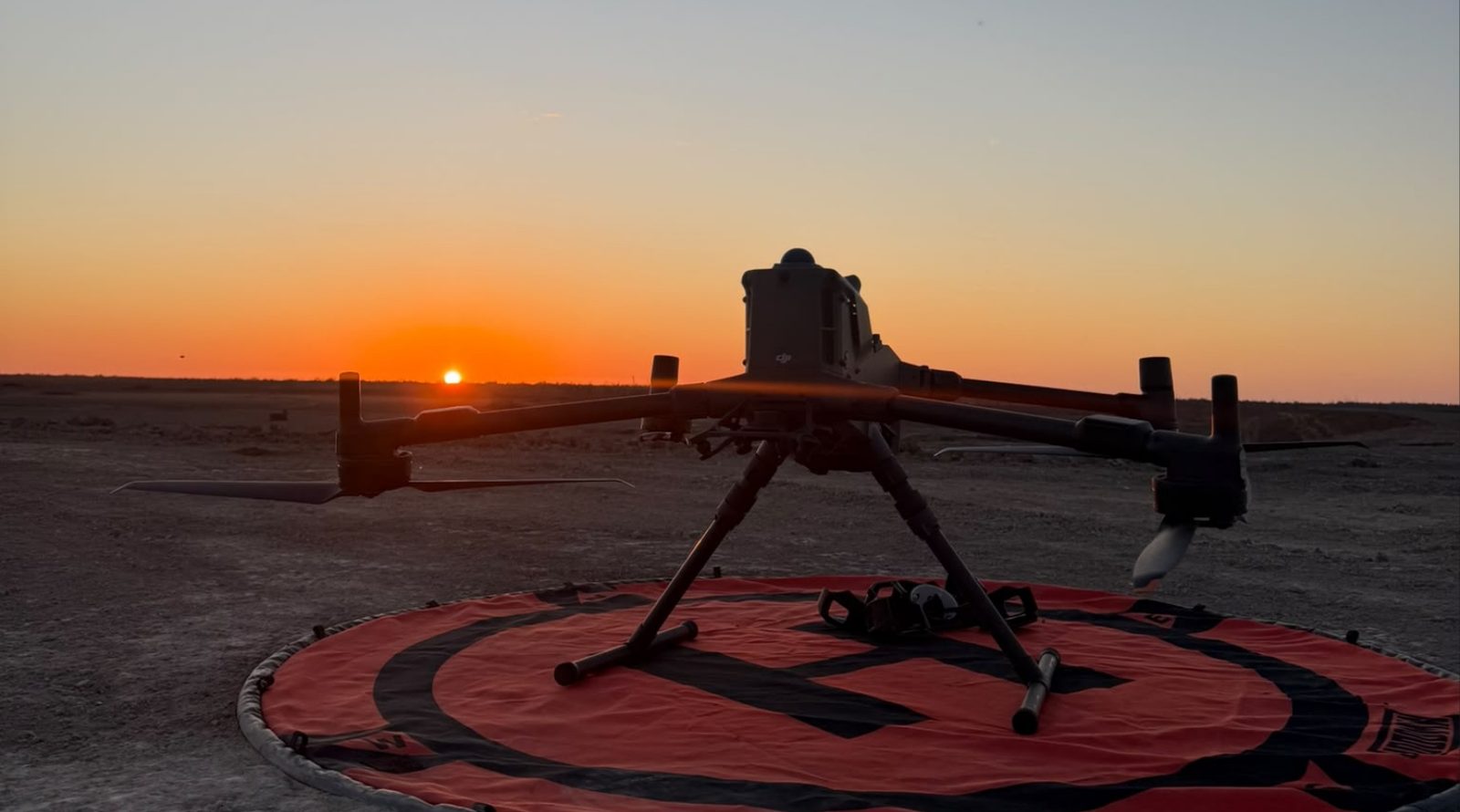
- DJI Matrice 400 — primary
- Zenmuse H30T — 1280 × 1024 radiometric thermal, ≤ 50 mK, wide + zoom + laser rangefinder
- DJI Matrice 4T — rapid and rooftop; 640 × 512 radiometric thermal, 48 MP zoom
- RTK positioning on both platforms
Processing
- Radiometric R-JPEG analysis
- Thermal and RGB orthomosaics
- GIS referencing to plant layout
- Anomaly register and field layers
- Baseline-to-campaign comparison
Same contractor
- Topographic and as-built survey
- Drainage and earthworks design support
- Vegetation mapping between rows
- Weed control across the site, in-house
- One mobilisation, one coordinate framework
- CASA ReOC holder — ARN 1210588. Chief Remote Pilot and RePL holder — ARN 1210579.
- Standard — IEC TS 62446-3 methodology for outdoor infrared thermography of PV systems.
- Safety record — zero recordable injuries since operations commenced in May 2023. Mine-inducted crews, job-specific SWMS.
- Supplier systems — Avetta · Pegasus / Onsite Track Easy · ICN Gateway (Business ID 1890843).
- Data handling — all project data held commercial-in-confidence.
- Locations — crews mobilise from Mackay QLD, Brisbane QLD, Gold Coast QLD and Sydney NSW.
Capability statementThe full Solar PV Thermography capability statement — scope, findings and classification, method, deliverables and credentials — for tender packs and procurement.
Solar farm thermography questions
What does an aerial PV thermography inspection deliver?
An anomaly register in CSV / XLSX ready for CMMS import, georeferenced thermal and RGB orthomosaics of the full plant, KML / SHP anomaly layers for field navigation, and a PDF report covering capture conditions, equipment, method, findings by class and block, and limitations.
Is every module inspected, or a sample?
Every module. Anomalies are counted, located to block, row, string and module, and classified — not extrapolated from a sample.
What conditions are needed to fly?
In-plane irradiance at or above 600 W/m² for the whole capture window, clear or lightly hazy sky, low wind, and a near solar-noon flight at steady altitude. Irradiance, ambient temperature, wind and sky state are logged and reported so campaigns are comparable.
How are anomalies classified?
Following the IEC TS 62446-3 methodology. Each anomaly is measured as ΔT against comparable modules and assigned Class 1 (no abnormality), Class 2 (thermal abnormality — detailed inspection, monitor) or Class 3 (safety-relevant — priority electrical inspection, isolate if confirmed). Root cause is confirmed by the electrical inspection the register directs.
Can you inspect mine-site solar and BESS?
Yes. Crews are mine-inducted and mobilise self-contained to remote and off-grid plants. BESS enclosures, inverters, transformers, HV yard connections and switchgear are surveyed thermally from outside, and vegetation or weed control can be carried out on the same visit.
What do we need to provide?
An as-built layout with block, row, string and module IDs (CAD, GIS or PDF), site access and inductions, an electrical contact for Class 3 findings on the day, and pyranometer or SCADA irradiance for the capture window if available. Call 1300 544 968 or send your plant layout for a fixed quote within one business day.